Ok, so I haven't posted here in almost a year, and I'm sorry for that for all two of you who read this. Apparently, however, I've found out that there are people who actually do/would care about all the shit I write about here had they known. Well, now they know, because I'm going to tweet everytime I update, so expect to see three weekly updates again starting today.
To rechristen the blog, I'm going to talk about the differences between
Salamander for the PC Engine (Japanese Turbografx-16) and
Life Force for the NES. The funny thing about these games is that they're more or less the same game. Follow me here; Konami released a game called
Salamander in the arcade in 1986, it was considered by many to be a sequel to
Gradius at the time, as
Gradius II: Gofer no Yabou wouldn't be released until 1988. In hindsight, it's clearly a spinoff, as the player one ship is the Vic Viper, the same ship the player flies into the heart of the Bacterion Empire in
Gradius (and most of its sequels, but that's a whole other blog post). The game improved on
Gradius in every way, expanding the arsenal (the debut of the Ripple Laser), adding 2-player support and alternating between horizontal and vertical levels. It also changed the power-up system, abandoning the now classic
Gradius upgrade system for a more traditional "enemies drop an item, you pick it up and get a new weapon/item" system. This is the game that was ported to the PC Engine in 1991.
The first level of
Salamander seems to take place in a giant living organism, and the fine folks at Konami seemed to think that was a sweet idea, so they redid the graphics for the American arcade release to make the whole thing look like the inside of an extra-giant living organism for all six levels and retitled it
Life Force. So, in essence, they are slight variations on the same game. They re-ported
Life Force back to Japanese arcades, changing the graphics even more, and reimplementing the
Gradius power-up system. This is the game that was ported to the NES in 1987 (and was oddly enough called
Salamander on that system in Japan).
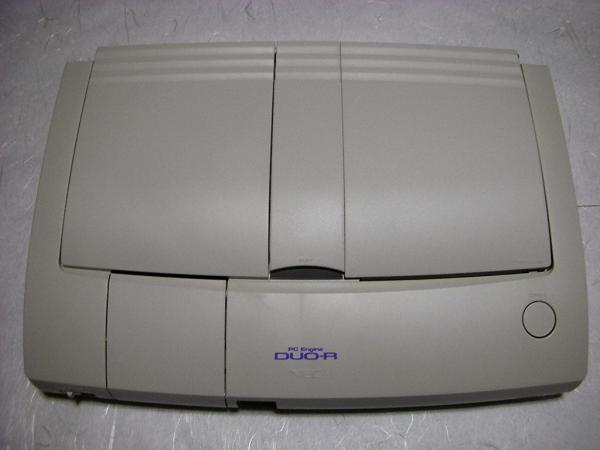
So, why the NES & PC Engine versions? Well, the easy answer is because they're the versions I own, but the reason they're the ones I own is because they're considered by most to be the definitive ports. Hell, part of the reason I bought a PC Engine Duo-R was for the port of
Salamander. And the NES game is a classic for anyone of my generation, and for me personally stands next to
Contra as the two best co-op experiences on the NES.
Most of this post is going to entail the differences, so we'll deal with the similarities first. The biggest one is that both have the same basic layout, alternating horizontal and vertical stages, three of each. They also share the same weapons/items (being Speed, Missle, Ripple, Laser, Option/Multiple, Shield/Force) and the same kickass soundtrack, compliments of the Konami Kukeiha Club, though the PC Engine version obviously has a fuller sound. They are, at the core, the same game.
So what's so different? I'm glad you asked. The first thing you'll notice, if you're a big fan of the NES game, is that the PC Engine game scrolls
much faster. Nearly double time, in fact. I didn't pull out the stopwatch, but stage one goes by in a blur. You'd think it would make the game harder, but it doesn't really, as the controls and default ship speed take it into account.
The second thing you'll notice, and one of the largest differences, is the power-up system. In the NES game, you collect power orbs a-la
Gradius and use the A button to power up when your meter hits the weapon/item you want to use/power up. In the PC Engine game, the enemies (the same enemies) drop weapon pickups instead of power orbs. This has two major effects; one being that getting Options (or Multiples, if you prefer) is much easier, the other being that if you die, certain weapons can't be regained depending on the level/checkpoint. For my money, though, the power-up system of
Salamander is preferable. Even though there'll be certain areas you can't get a Laser in (my weapon of choice), getting Options is much, much easier, as they're given out like candy, thereby making it easier to get by even with your default pea shooter.
After you start collecting power-ups, you'll find that the Shields are different.
Life Force uses the Force Field item, which surrounds your ship in a blue haze (a red haze if you're player two) and protects you from all angles for just a couple hits.
Salamander uses the original
Gradius Shield item, which is two spinning stars that only protect you from the front, but can take many more hits. Later games in the
Gradius &
Parodius series would give you the option at the start of the game to choose which style you like.
Now, the more power-ups you collect, you begin to realize that, due entirely to the NES processor, in
Life Force you can only hold two Options, while in the PC Engine game, you can hold four. This affects the balance of the game to a certain extent, but the faster scrolling and greater ability of the PC Engine to show more sprites on screen with less slowdown make up for it.
And by about this time, you'll have finished the first stage, at which point you will notice a small difference, followed by a big one. The biggest one, in fact. The small thing you'll notice is that the sprite of your ship actually pivots and turns vertical for the trip to stage two. A nice touch, courtesy of the horsepower of the PC Engine graphics processor(s). Then you better grab your chair for a shock if you've spent your whole life with the NES game. Stage two is
completely different in the two games.
Salamander drops you into a visually dull, but challenging asteroid field.
Life Force drops you into a vertical version of
Gradius's first stage, with rocks all over and volcanos shooting flaming rocks at the Vic Viper (and Road British, if there's two players). If you press on in
Salamander, you too will see this stage, but not until stage four.
The interesting thing here is that
Life Force more or less combines stages two and four of
Salamander into stage two, and it ends with you facing off against both the bosses from the
Salamander stages. From there, stage three is pretty well identical, with two exceptions. One, the big solar flares telegraph much more clearly in
Salamander, which makes the stage much easier. In the NES game, even after all the time I've sunk into it, stage three is still the hardest stage for me, in
Salamander it's significantly easier than stage four, which is a fair tradeoff, as stage two in
Life Force is much easier than that (still following this?). (The arcade version of
Life Force features the same stage layout for stage three, but the flames are blue and the background has veins all over it, in keeping with the whole "inside a giant monster alien" theme. Strangely, the NES version's is identical to
Salamander in aesthetic.)
The other stage three difference is the boss. In both you face off against a long dragon that flies around the screen, but after finishing it off in the PC Engine game, the level is over. After blasting it out of the sky in
Life Force, you fight the head of a much, much larger dragon, then on to stage four.
We've covered that stage four of the PC Engine game is a stage we've already beaten in the NES game, so what happens now if you're playing the NES? Well, you see more of the bio theme. It's a vertical scrolling stage of the inside of a body. There are kidney-like things that spontaneously sprout arteries, a laser shooting ribcage and a boss fight with a giant skull that spits bullets with eyes the leave the sockets and fly around the screen. Nevermind the sped up section with tunnel navigation that requires old school twitch reflexes.
After both of these stages, welcome to two completely different stage fives!
Salamander gives you a horizontally scrolling asteroid field, which is every bit as boring as stage two only scrolling the other way. It does culminate in a very good boss fight against a sort of
Gradius-style Big Core on steroids. It's only vulnerable when it opens its front hatch to fire, but it shoots in a big spread and it shoots big bullets, followed by several enemies. I don't imagine it's easy or even possible without Options.
So, while the PC Engine game wins out on the boss fight,
Life Force shames the other in level design. We enter a blue cavern, with trecherously placed mountains and turrets, that gives way (admittedly in a somewhat jarring fashion) to an Egyptian-style temple/pyramid with pumping columns, and multiple routes though destructable walls. It ends with a fairly blasé boss battle against a giant sarcophagus head.
Then stage six. The final stage is more or less the same in both versions. There's some minor differences in Moai Head placement during the lead up to the final boss, and
Salamander has you fight a few Big Cores, but they go down very easily so it's not much to write home about. The final boss in the biggest difference here. In
Salamander, you fight the eye of Zelos while little walker enemies walk up and down the walls, doing nothing to hurt you, unless you're dumb enough to fly into them. Zelos' only attack is a lightning bolt from the center of the eye that can destroy your Options. In Life Force, the eye of Zelos is protected by a dragon that you must kill first, but Zelos itself has no attacks.
In both games, a twitch flight out of an exhaust shaft with closing bars is your last challenge. This is much easier in the NES game, as you instantly respawn when you die. This is not the case in a single player game of
Salamander, which means you have to essentially memorize the shaft and do it perfectly to escape. Following a successful escape, both games show a brief ending of the ship flying out while the planet explodes in the background.
Overall, both games are excellent, and any retrogamer would do well to have both in their collection, but, and it may be the nostalgia talking,
Life Force is just a bit better. The stage design in stages four and five outshine the design in Salamander stages two and five, and for two games that are essentially the same, an edge in stage design is all it takes. Still,
Salamander is great, and is worth every penny I paid for it.
LINKS:
Hardcore Gaming 101's Gradius ArticleSalamander on WikipediaMy Life Force Shoot-'Em-Up Training video from two years ago.I'll be back on Wednesday with "The Milwaukee Dave & Buster's and Arcade Culture in America." Look for it!



 Posts