Sunday, March 21, 2010

Top Five Friday (Slightly Late Edition): Top Five Consoles to Import Games For

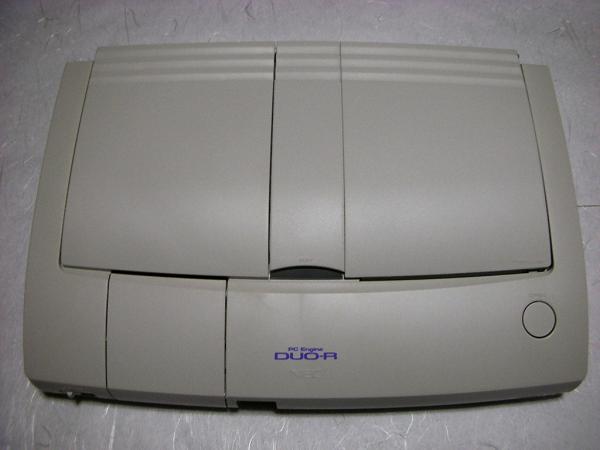
I just got a PC Engine Duo-R (that doesn't play CD-ROM2s, but I don't want to talk about that right now), and it's got me thinking that there are some systems that just didn't reach their full potential in America. Some you just need to import games for. These are the consoles that require modding or buying the Japanese version of to get the best experience. The list is in chronological order of release.


Nintendo Entertainment System/Famicom

Still my favorite system after all these years, when I started importing Famicom games about five years ago, I opened up a whole new world. Sure, the big time classics came to the US, Contra, Mega Man, all that stuff, but Japan saw a lot of games we didn't. A lot of great stuff we didn't. There are plenty of decent-ish Famiclones available that allow for import play, so getting started isn't too hard, though I do want a Twin Famicom someday. Favorite imports off the top of my head would be Splatterhouse: Wanpaku Graffiti, Gradius II (though it's tough as nails) and New Ghostbusters 2.


Turbografx-16/PC Engine

Especially with the Wii's Virtual Console, I can't imagine anyone having a real desire to own an American Turbografx at this point, unless you're a collector. If you just want to play games, most of the standout American releases are available on VC (and a couple Japanese ones, too).

The Turbografx was a distant third place competitor of the Genesis and SNES. The PC Engine blew away the Genesis (Mega Drive) in Japan, and it's not hard to see why. The PC Engine has a giant and great library. It's like I've just opened an entire new chapter of gaming history to myself. Favorites include the formative years of the Fire Pro Wrestling series and any Konami arcade ports you can get your hands on. Of course, Dracula X: Rondo of Blood is up there, but it's about $100 cheaper on VC than getting a disc copy. Check out the PC Engine Software Bible for more info.


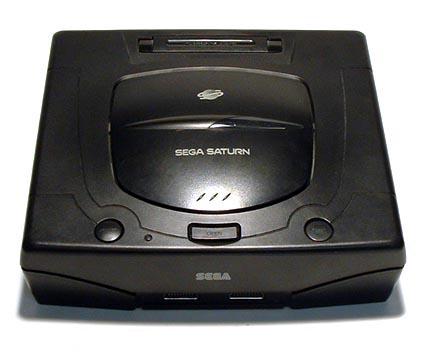
Saturn

Sega of America apparently decided they didn't want to use the Genesis' momentum at all, and that they'd totally shoot themselves in the foot on the Saturn. Great US releases are somewhat rare, and copies of said releases are often even rarer still. Just look at the latest eBay auction prices for a US copy of Guardian Heroes vs. a Japanese one. Go ahead. I'll wait. See what I mean?

Forget about that for a minute though, and just check all the games that never even made it here. Deep Fear, All-Japan Pro Wrestling featuring Virtua, tons of shooters, it's all great stuff, and it's the reason the system did so, so much better in Japan.


Dreamcast

Sega redeemed themselves in America with the Dreamcast, but it was too little, too late, and the system died too soon in both territories. Of course, before it did (and after, now that I think about it), there were many awesome games that didn't make the trans-Pacific journey. Giant Gram (notice how many wrestling games I'm mentioning?), Shenmue II (if you're into that and don't have an Xbox) and many shooters released after the system "died" make for an importer's paradise.


Playstation 2

I have two words for you. Sega Ages. M2 has handled several of Sega's classic franchises with the kind of love and care that nerds like me love to see. These are packages of entire series, every version (every region and system), displayed in the original resolution with box art and instructions. These alone are worth finding a way to import for your PS2 (I recommend a soft mod, they're affordable and easy, but Japanese PS2s are pretty affordable these days). Not to mention the crazy amount of other games available. Besides most of the latter Sega Ages titles, I highly recommend King of Colosseum 2 (had to get my grappler in there).

LINKS:
Hardcore Gaming 101's Post-Mortem Dreamcast Shooters article
Hardcore Gaming 101's Sega Ages article
The PC Engine Software Bible

Thursday, March 18, 2010

Dave and Buster's and American Arcade Culture

Until this month, there hadn't been an arcade in my hometown of Milwaukee for some years. The last was an Aladdin's Castle I frequented as a youth that was not only closed, but razed to the ground sometime in the last half decade. I didn't hear about it when it happened, and was quite surprised when I went to play a couple games one day. Apparently, it'd been gone for nearly a year by that point.

Now, there's Dave & Buster's. If you're not familiar, allow me to edify you. Dave & Buster's is essentially a grown up version of Chuck E. Cheese's. It's big and loud and there's booze and food. You have to be 21 or over to get in, or accompanied by someone over 25 before 9pm. After 9pm, you must be over 21.

I'd been to the one in Honolulu before, and wasn't terribly impressed, but that was years ago, and now there was now one close to my house. Besides, a friend was having her 30th birthday party there, so I had to go. So, last saturday, off I went to see the shiny new arcade.

I'm still not impressed.

Dave & Buster's is filled with claw machines (including a comedically huge one with appropriately sized prizes), skee ball, racing games and light gun shooters, mostly with film licenses and Dreamcast-quality graphics attached. There was also a Guitar Hero Arcade cabinet or two and, if you looked really hard, seven retrogames separated into three combo cabinets (being Mario Bros./Donkey Kong/Donkey Kong, Jr., Qix/Space Invaders and Galaga/Ms. Pac-Man).

I was disheartened to say the least. Chicago has, or at least had the last time I looked into it, at least two arcades worth frequenting. One is Nickel City, which is owned by Capcom and is filled to the brim with old school goodness, all available for a nickel a credit. The other is Sega's GameWorks, which, if I were to describe it in basic terms, is a lot like Dave & Buster's, but has an area separated for retrogames, and includes slightly more obscure fare like Moon Patrol and Burgertime.

I was hoping for something more in line with GameWorks. Last time I was at GameWorks, they had SNK vs. Capcom: SVC Chaos on a large projection screen. More obscure than anything I reasonably expected to see at Dave & Buster's, but I certainly didn't think a Street Fighter II cabinet would be too much to ask for. Clearly, I thought wrong.

Which made me start to question how what I want from an arcade differs from what other people want from an arcade. You might think with all my grousing that the place would be empty, and if it were, deservedly so. Alas, faithful reader, it was packed. To the goddamn gills. There was a 2 1/2 hour wait to eat, if you wanted to. 2 1/2 hours and not a single Street Fighter cabinet in sight.

It seems that the arcade, at least in America, is little more than a novelty. You go, you get drunk while you wait 2 1/2 hours to eat mediocre food, then you play some racing games with your frat buddies, then you go home and maybe come back in two months. Not that there's anything wrong with that, but an arcade should be about choice. God knows this place has the floor space for it. Literally, no exaggeration, 90% of the floor space is ticket games, racing games and light gun games. The rest is a couple rhythm games and the limp selection of retro titles I mentioned earlier.

Clearly, this is what the people want. It's a casual place filled with casual games. I'm not casual, so I guess Dave & Buster's isn't for me, but I'd like a bit more of a concession that what was offered. The people who were there on Saturday aren't going to be regulars, but me? With a very few of the right titles, you got me in there once a week. Of course, I don't drink, either, and I'm sure much of their revenue comes from mediocre food and booze, so maybe they don't care about people who would come solely to play games. Maybe I'm that much of a dinosaur. And maybe that's why there's a vacant lot where Aladdin's Castle used to be.

Things have changed. We can game socially from our couches with XBox Live and Playstation Network, and I'm all for those things, but nothing's like meeting a total stranger (face to face so he can't call you epithets without getting punched) and challenging his/her skills. Nothing's like teaming up with five strangers and pummeling your way through Konami's X-Men arcade game.

I didn't see any of that. I saw people with groups of their friends, all playing the same games with the people they came with. Not branching out. Not being social in the true sense of the word.

I'll admit this is kind of getting away from me. It's 3am, and I'm exhausted, but I guess what I'm saying is that I just want a real arcade experience. Is that too much to ask?

Tuesday, March 16, 2010

Salamander (PCE) vs. Life Force (NES)

Ok, so I haven't posted here in almost a year, and I'm sorry for that for all two of you who read this. Apparently, however, I've found out that there are people who actually do/would care about all the shit I write about here had they known. Well, now they know, because I'm going to tweet everytime I update, so expect to see three weekly updates again starting today.

To rechristen the blog, I'm going to talk about the differences between Salamander for the PC Engine (Japanese Turbografx-16) and Life Force for the NES. The funny thing about these games is that they're more or less the same game. Follow me here; Konami released a game called Salamander in the arcade in 1986, it was considered by many to be a sequel to Gradius at the time, as Gradius II: Gofer no Yabou wouldn't be released until 1988. In hindsight, it's clearly a spinoff, as the player one ship is the Vic Viper, the same ship the player flies into the heart of the Bacterion Empire in Gradius (and most of its sequels, but that's a whole other blog post). The game improved on Gradius in every way, expanding the arsenal (the debut of the Ripple Laser), adding 2-player support and alternating between horizontal and vertical levels. It also changed the power-up system, abandoning the now classic Gradius upgrade system for a more traditional "enemies drop an item, you pick it up and get a new weapon/item" system. This is the game that was ported to the PC Engine in 1991.

The first level of Salamander seems to take place in a giant living organism, and the fine folks at Konami seemed to think that was a sweet idea, so they redid the graphics for the American arcade release to make the whole thing look like the inside of an extra-giant living organism for all six levels and retitled it Life Force. So, in essence, they are slight variations on the same game. They re-ported Life Force back to Japanese arcades, changing the graphics even more, and reimplementing the Gradius power-up system. This is the game that was ported to the NES in 1987 (and was oddly enough called Salamander on that system in Japan).

So, why the NES & PC Engine versions? Well, the easy answer is because they're the versions I own, but the reason they're the ones I own is because they're considered by most to be the definitive ports. Hell, part of the reason I bought a PC Engine Duo-R was for the port of Salamander. And the NES game is a classic for anyone of my generation, and for me personally stands next to Contra as the two best co-op experiences on the NES.

Most of this post is going to entail the differences, so we'll deal with the similarities first. The biggest one is that both have the same basic layout, alternating horizontal and vertical stages, three of each. They also share the same weapons/items (being Speed, Missle, Ripple, Laser, Option/Multiple, Shield/Force) and the same kickass soundtrack, compliments of the Konami Kukeiha Club, though the PC Engine version obviously has a fuller sound. They are, at the core, the same game.

So what's so different? I'm glad you asked. The first thing you'll notice, if you're a big fan of the NES game, is that the PC Engine game scrolls much faster. Nearly double time, in fact. I didn't pull out the stopwatch, but stage one goes by in a blur. You'd think it would make the game harder, but it doesn't really, as the controls and default ship speed take it into account.

The second thing you'll notice, and one of the largest differences, is the power-up system. In the NES game, you collect power orbs a-la Gradius and use the A button to power up when your meter hits the weapon/item you want to use/power up. In the PC Engine game, the enemies (the same enemies) drop weapon pickups instead of power orbs. This has two major effects; one being that getting Options (or Multiples, if you prefer) is much easier, the other being that if you die, certain weapons can't be regained depending on the level/checkpoint. For my money, though, the power-up system of Salamander is preferable. Even though there'll be certain areas you can't get a Laser in (my weapon of choice), getting Options is much, much easier, as they're given out like candy, thereby making it easier to get by even with your default pea shooter.

After you start collecting power-ups, you'll find that the Shields are different. Life Force uses the Force Field item, which surrounds your ship in a blue haze (a red haze if you're player two) and protects you from all angles for just a couple hits. Salamander uses the original Gradius Shield item, which is two spinning stars that only protect you from the front, but can take many more hits. Later games in the Gradius & Parodius series would give you the option at the start of the game to choose which style you like.

Now, the more power-ups you collect, you begin to realize that, due entirely to the NES processor, in Life Force you can only hold two Options, while in the PC Engine game, you can hold four. This affects the balance of the game to a certain extent, but the faster scrolling and greater ability of the PC Engine to show more sprites on screen with less slowdown make up for it.

And by about this time, you'll have finished the first stage, at which point you will notice a small difference, followed by a big one. The biggest one, in fact. The small thing you'll notice is that the sprite of your ship actually pivots and turns vertical for the trip to stage two. A nice touch, courtesy of the horsepower of the PC Engine graphics processor(s). Then you better grab your chair for a shock if you've spent your whole life with the NES game. Stage two is completely different in the two games. Salamander drops you into a visually dull, but challenging asteroid field. Life Force drops you into a vertical version of Gradius's first stage, with rocks all over and volcanos shooting flaming rocks at the Vic Viper (and Road British, if there's two players). If you press on in Salamander, you too will see this stage, but not until stage four.

The interesting thing here is that Life Force more or less combines stages two and four of Salamander into stage two, and it ends with you facing off against both the bosses from the Salamander stages. From there, stage three is pretty well identical, with two exceptions. One, the big solar flares telegraph much more clearly in Salamander, which makes the stage much easier. In the NES game, even after all the time I've sunk into it, stage three is still the hardest stage for me, in Salamander it's significantly easier than stage four, which is a fair tradeoff, as stage two in Life Force is much easier than that (still following this?). (The arcade version of Life Force features the same stage layout for stage three, but the flames are blue and the background has veins all over it, in keeping with the whole "inside a giant monster alien" theme. Strangely, the NES version's is identical to Salamander in aesthetic.)

The other stage three difference is the boss. In both you face off against a long dragon that flies around the screen, but after finishing it off in the PC Engine game, the level is over. After blasting it out of the sky in Life Force, you fight the head of a much, much larger dragon, then on to stage four.

We've covered that stage four of the PC Engine game is a stage we've already beaten in the NES game, so what happens now if you're playing the NES? Well, you see more of the bio theme. It's a vertical scrolling stage of the inside of a body. There are kidney-like things that spontaneously sprout arteries, a laser shooting ribcage and a boss fight with a giant skull that spits bullets with eyes the leave the sockets and fly around the screen. Nevermind the sped up section with tunnel navigation that requires old school twitch reflexes.

After both of these stages, welcome to two completely different stage fives! Salamander gives you a horizontally scrolling asteroid field, which is every bit as boring as stage two only scrolling the other way. It does culminate in a very good boss fight against a sort of Gradius-style Big Core on steroids. It's only vulnerable when it opens its front hatch to fire, but it shoots in a big spread and it shoots big bullets, followed by several enemies. I don't imagine it's easy or even possible without Options.

So, while the PC Engine game wins out on the boss fight, Life Force shames the other in level design. We enter a blue cavern, with trecherously placed mountains and turrets, that gives way (admittedly in a somewhat jarring fashion) to an Egyptian-style temple/pyramid with pumping columns, and multiple routes though destructable walls. It ends with a fairly blasé boss battle against a giant sarcophagus head.

Then stage six. The final stage is more or less the same in both versions. There's some minor differences in Moai Head placement during the lead up to the final boss, and Salamander has you fight a few Big Cores, but they go down very easily so it's not much to write home about. The final boss in the biggest difference here. In Salamander, you fight the eye of Zelos while little walker enemies walk up and down the walls, doing nothing to hurt you, unless you're dumb enough to fly into them. Zelos' only attack is a lightning bolt from the center of the eye that can destroy your Options. In Life Force, the eye of Zelos is protected by a dragon that you must kill first, but Zelos itself has no attacks.

In both games, a twitch flight out of an exhaust shaft with closing bars is your last challenge. This is much easier in the NES game, as you instantly respawn when you die. This is not the case in a single player game of Salamander, which means you have to essentially memorize the shaft and do it perfectly to escape. Following a successful escape, both games show a brief ending of the ship flying out while the planet explodes in the background.

Overall, both games are excellent, and any retrogamer would do well to have both in their collection, but, and it may be the nostalgia talking, Life Force is just a bit better. The stage design in stages four and five outshine the design in Salamander stages two and five, and for two games that are essentially the same, an edge in stage design is all it takes. Still, Salamander is great, and is worth every penny I paid for it.

LINKS:
Hardcore Gaming 101's Gradius Article
Salamander on Wikipedia
My Life Force Shoot-'Em-Up Training video from two years ago.


I'll be back on Wednesday with "The Milwaukee Dave & Buster's and Arcade Culture in America." Look for it!

Monday, April 27, 2009

Saturday, April 4, 2009

Top Five Saturday: Top Five Non-Main Event Wrestlemania Matches

Remember yesterday, when I said there'd be two updates? Yeah, I lied. But now you get an update today! This list ignores the main events, and goes to the oft-ignored undercard of Wrestlemania. They are presented in chronological order.

-"Macho Man" Randy Savage (c) vs. Ricky "The Dragon" Steamboat for the Intercontinental Championship, Wrestlemania III This is a total no-brainer. Savage and Steamboat had the best match of the first three Wrestlemanias, and by a country mile. If you haven't seen this match, you owe it to yourself to check it out.

-"The Million Dollar Man" Ted DiBiase vs. Jake "The Snake" Roberts, Wrestlemania VI Two of the greatest wrestling minds in history go for 12 minutes of pure old-school psychology. Every movement has a reason. One of the all time greats.

-"Stone Cold" Steve Austin vs. Bret "The Hitman" Hart in a Submission Match, Wrestlemania XIII This is the match the rocketed Steve Austin to superstardom, and with good reason. The entire match is steeped in psychology, with each man trying to outdo the other, and ends with a finish that puts both guys over.

-The Undertaker vs. Triple H, Wrestlemania XVII The Undertaker's undefeated streak has it's ups and downs, but in my opinion, this is the biggest up (mostly likely until tomorrow night). This 20 minute brawl with Triple H (who was reportedly suffering from the flu) is one of 'Taker's best matches, period. It's a go anywhere donnybrook, that climaxes with Triple H being chokeslammed off of a scaffold.

-Shawn Michaels vs. Chris Jericho, Wrestlemania XIX Shawn Michaels is Mr. Wrestlemania, and that's no joke. Every Wrestlemania match he's been in is at least watchable (not even the Undertaker can lay claim to that), but most are great. This one is the best (possibly until tomorrow night), and the finish laid the groundwork for even greater matches to come.

Friday, April 3, 2009

Wrestlemania XXV Preview

Ok, I've been behind all week, but today is a double post day, so perk up, loyal readers! This was meant to go up Wednesday, but I was at the Faint/Ladytron show that night. Anyways, here we go, match by match for this year's Grandaddy of 'Em All.

Chris Jericho vs. "Rowdy" Roddy Piper, "Superfly" Jimmy Snuka & Ricky "The Dragon" Steamboat, with Ric Flair in their corner- Quite honestly, I think this is a waste of talent, on all sides. They teased a 0ne-on-one match between Flair and Jericho, but Flair actually wants to respect his retirement (strange, huh?) so it looks like it'll be a three on one. The only problem is, that cheapens the Legends. I know they're old, but it takes three of them to take on one Jericho? Doesn't that kind of lend creedence to all the things Jericho's been saying all along? A one-on-0ne with Piper would've probably been a better match. Either way, it'll be a crowd pleaser.

25 Diva Battle Royal- The only word for this is "meh."

CM Punk vs. Kane vs. Mark Henry vs. MVP vs. Finlay vs. Christian vs. Shelton Benjamin vs. Kofi Kingston in a Money in the Bank Ladder Match- Always a crowd pleaser, this year's money in the bank supplies an interesting line up. The only possible victors here are Christian or CM Punk, and the smart money's on a repeat for Punk. No one else is over enough to be considered a serious threat to any title, though Henry could've been if they'd kept him on TV more often after dropping the ECW title to Matt Hardy. Regardless, it should be entertaining, with all the superstars taking some sick bumps for your viewing pleasure.

Shawn Michaels vs. The Undertaker- I'm saying right now that this is the match of the show, if not the year. HBK is Mr. Wrestlemania, and that's a shoot. The Undertaker was also telling the truth in his promo about pulling out all the stops for Wrestlemania. Naturally, the Undertaker goes over, because Shawn has nothing to lose, but the journey there is gonna be a wild ride. Don't miss this match!

The Miz & John Morrison w/Nikki Bella vs. Primo & Carlito w/Brie Bella in a Lumberjack Match to unify the Tag Team Titles- These four guys have shown time and time again that they can have great matches. Lumberjack matches are interesting, but don't really add much. It is nice to see everyone be able to get a Wrestlemania payday, though. Ultimately, I'm concerned that this match just won't get enough time for us to see what all these guys can do, and to use the Lumberjack gimmick to it's fullest.

Jeff Hardy vs. Matt Hardy in an Extreme Rules Match- I'll be honest, I was hoping they'd put these guys in the Money in the Bank match, and push their singles blowup all the way to Summerslam, with Jeff refusing to fight Matt. That didn't happen, but this match should still be one of the greats. Both of these guys have tons of talent, and an affinity for "taking it to the extreme," so expect some sick bumps and solid ringwork.

John "Bradshaw" Layfield (c) vs. Rey Mysterio for the Intercontinental Title- Bradshaw's claimed that he's gonna "make Wrestlemania history" by beating Rey Mysterio so badly. That tells me that this match should be 8 seconds long, as King Kong Bundy beat SD Jones in 9 seconds, which was the worst beating in Wrestlemania history. As it stands, I doubt that. I'm curious, but I don't think the match will be great. JBL can't move around like he used to, and that will affect his repore with Mysterio.

Edge (c) vs. The Big Show vs. John Cena for the World Heavyweight Title- There's no doubt these three will deliver the goods. Look for Vicki Guerrero to be at ringside, distracting both of her lovers. Cena will get a victory in a solid match, and I expect Vicki to be the cause. This love triangle is going to cave-in on itself.

Triple H (c) vs. Randy Orton for the WWE Title- There's no doubt this match is going to be great. Randy Orton probably should cheat his way to victory, but it's Wrestlemania, and the people want to see Triple H get revenge for his in-laws. There's no male fan who doesn't sympathize with H, having been forced to watch another man beat up his wife. Nothing would stop any of us from taking a brutal revenge, so expect Triple H to.

Tuesday, March 31, 2009

Wrestlemania III: Championship Edition DVD Review

In 2007, in anticipation of the 20th anniversary of Wrestlemania III, WWE released the Wrestlemania III: Championship Edition DVD (coming soon, Wrestlemania III: Turbo?). Wrestlemania returned to Detroit for the 23rd installment, and it was all meant to tie in. The DVD is a 2-disc set, and features the event, and a slew of bonus features. Among them are several TV matches from the weeks leading up to the event, various promos, and, as a special bonus, a "Pop-Up Video" style version of the entire event featuring factoids and interview clips with the participants. This last item was previously only available to people with access to WWE 24/7 (i.e. not me), and was the biggest draw for me personally.

The entire package does not disappoint. Sure, the transfer isn't great, but what piece of 20 year old videotape (not film) is going to transfer that well? Sure, some of the bonus material isn't great (battles royals that aren't the Royal Rumble are usually dull, the one here sure is), but alot of it is great (plenty of "Mean" Gene). Overall, it's a solid purchase for any wrestling buff.

However, there is one thing about it that keeps bugging me. This DVD is how the old Wrestlemanias should be treated when coming to DVD, and yet, this is the only one (previous to Wrestlemanias that just came out on DVD because that was the format for home video) that has gotten this type of treatment. I expected at the time, that as we crested the 20th anniversary of each successive Wrestlemania, there would be another Championship Edition DVD. I expected they go back and do the first and second events, and that by now, I'd have copies of two of my favorite 'Manias on my shelf. But alas, they have not come

The Wrestlemania Anthology boxset is nice, but the DVDs contained therein have no bonus features of any kind. I want the histories, the facts, the "Mean" Gene interviews from Prime Time Wrestling. So, why has WWE forsaken me? Do they not want my money? This is one instance where I'll willingly go in on the double dip. I won't complain.

Please?