Anyone who was witness to MTV's last wrestling debacle was probably smart enough to either skip last week's Lucha Libre USA debut show, or have severely lowered expectations. I fell into the second camp, as someone who, for some reason unknown even to me, watched every episode of the sub-par and deservedly short-lived Wrestling Society X. That being the case, I was almost impressed by what Lucha Libre USA put forth.
WSX had three major problems. 1) The show was 30 minutes long. A half-hour is not long enough for a wrestling show, unless it only has one match, and how far can you advance stories with one match per week unless your roster is four guys? 2) Because of #1, the matches were all clipped, and not only were they clipped, the audience wasn't told that they were clipped, which made them look terrible, though I'm sure many of them weren't. 3) Musical guests. Nothing like taking up a third of the show with a musical guest none of the wrestling fans give a fuck about, am I right?
You will be happy to know that LLU has none of these things. Unfortunately, what it does have is a bunch of guys most people have never heard of, and the bookers are doing a pretty poor job of making us care about any of them. They're basically trying to bring us into their world in media res. This does not work in wrestling. I understand lucha has rudos (heels) and technicos (babyfaces), but just telling us "he's a rudo and he's a technico" doesn't give us any reason to cheer or boo. The wrestlers and the booking needs to give us reasons to do that.
The first match on the card was a trios match, which is not the same as an American rules six-man tag. It featured rudos El Oriental, El Limon & Neutronic vs. technicos Mascara Purpura & the PR Powers. The rules were explained haphazardly (there's a captain, if he gets pinned, it's over, otherwise both of the other guys on the team must be pinned), and did not offer much clarification. (If one of the non-captain guys is pinned, is he eliminated? Does he have to go to the back?) The finish only compounded the issue, since both non-captain members of the technico team were pinned simultaneously, which would lead viewers to question in future matches if that's how it has to be done.
Beyond that, the match was ok. Nothing spectacular, but reasonably solid in ring work, no breakthroughs in wrestling psychology, but not bad. Enough high spots to get viewers hooked at the prospect of later matches being actually good.
There was a promo by R.J. Brewer playing up an anti-Mexican heel. He's from Arizona, he hates illegal immigrants, he also hates legal ones because he doesn't know for sure if they're legal, blah, blah, blah. Very one dimentional, full of cheap heat. Hopefully, he'll get a chance to branch out.
There was a tag match from the "minis" division. I assumed that meant midgets, but only one guy in this match looked to be a midget. It's hard to tell a wrestling audience that a guy who's the size of Evan Bourne (Mini-Park) is a guy who is in the same division as midgets. It just doesn't make sense. And all the while, the announcers are putting over how much Pequeno Halloween and Marscarita Dorada (the actual midget) hate each other. Okay, that's fine, they hate each other, but why? At least show me some tape of a AAA show or something, or book this match like there's real bad blood, because these guys were locking up in the middle of the ring.
Moving on to the main event, we had Marco Corleone (Mark Jindrak, for all you WCW fans) taking on Tinieblas, Jr. There was a promo with Tinieblas talking about how famous his mask is, despite the fact that almost no one watching this has ever seen it before, (either on him or Tinieblas, Sr.) then Jindrak says something about beating him up, being his daddy, really standard, non-creative promo stuff.
The match itself wasn't too bad, but they're clearly trying to push Jindrak as their top technico, which isn't going to work. Two reasons for that: 1) If I'm watching lucha, I want a dude in a mask as the top babyface, it's what casual fans who tune into lucha expect. 2) His charisma is... lacking, to say the least. In a world of John Cenas and Rob Van Dams, even of Tyler Blacks, Mark Jindrak doesn't have what it takes to carry a promotion. Which really just takes us back to #1, because a mask can do wonders for a guy who isn't naturally charismatic. Ever wonder why WWE put the mask back on Rey after WCW took it off? Well, besides all the merch they can sell...
Still, though, I was more entertained that watching an episode of iMPACT, because while the booking was bog standard, it wasn't dick-in-the-toaster idiotic. I'll give it a few more weeks to see if it picks up once it's in the swing of things. And while it's faint praise, I'll say it's worlds better than MTV's last wrestling show.
Wednesday, July 21, 2010

Tuesday, July 20, 2010
A thing from by way of Things That Don't Suck
Embedding doesn't work, so I'm just posting a link to this video essay Bryce from Things That Don't Suck did. Enjoy!
http://www.youtube.com/watch?v=2qYzk-XPxBw
http://www.youtube.com/watch?v=2qYzk-XPxBw
Inception: The Metaphysical Heist Movie
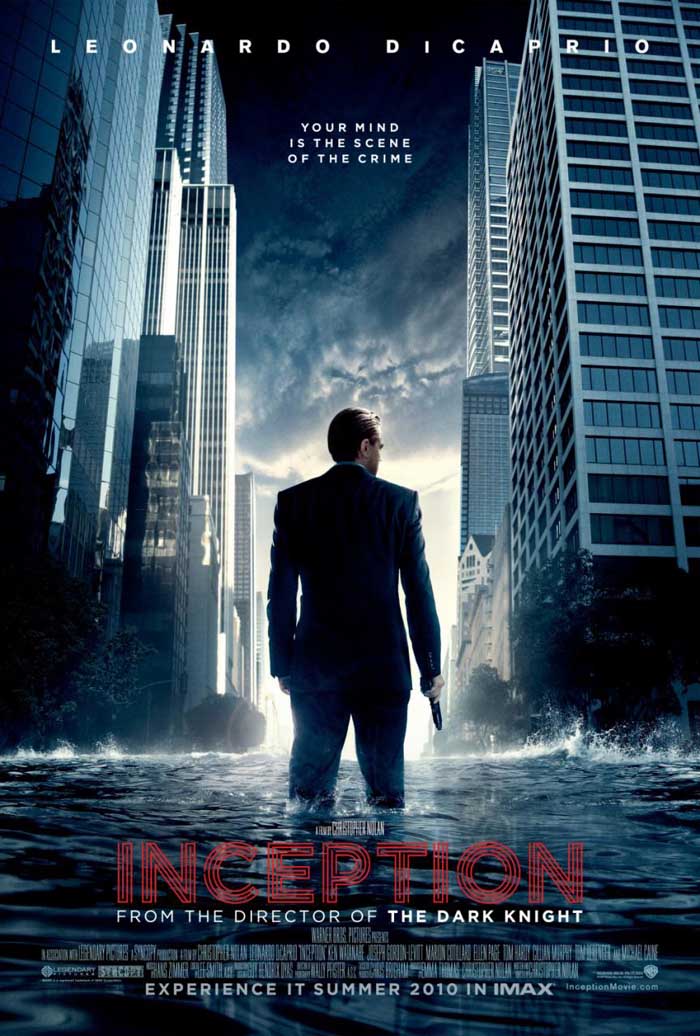
*WARNING: MAJOR SPOILERS AHOY*
Inception is, at its core, a heist picture. It's a thinking person's action movie. They like to call those "thrillers," so that people who watch them don't feel like they're enjoying some kind of b-grade genre film. Which they're not. In Inception's case, they're enjoying an a-grade genre film, and Christopher Nolan has added another fine notch to his belt with this one.
He's basically turned the heist genre on its head with this one. It's not about stealing, it's about delivering. And it's not from a traditional vault, but a person's mind. Still, it follows the heist formula more or less to a T, right down to "one last job." Rounding up his team, working out the plan, and then pulling off the caper, not without a few hitches, of course.
Being both a heist caper and a Nolan film, you can imagine that it'll require a second viewing. The completely batshit insane metaphysics involved pretty much guarantee that. And, honestly, that's where the film is the weakest. In the final act, there's a three-layered dream sequence, that becomes a four-layered dream sequence that starts to crumble under the weight of its own movie-science, particularly as it pertains to how the kicks work. That being said, it's movie-science, and getting too bogged down in it is kind of missing the point anyways.
Really, the heart of the film is three fold, and little of it has to do with trying to understand metaphysics. No, the film's really about 1) how strikingly gorgeous it is, 2) Cobb's inability to forgive himself for Moll's death and 3) totally sweet action sequences. The second is arguably the most important if you're a film snob, but they're all equally important if you're a normal person who likes movies. The scene with Arthur (Joseph Gordon-Levitt) fighting the dude in the rotating hallway was my personal favorite (and reportedly done with practical effects, which you know I love).

Either way, in the roll of Cobb, DiCaprio emotes very well, as usual, and you feel genuinely bad for him. Despite my teenage loathing for him, he's now one of my favorite actors, with the gravitas to pull these kinds of rolls off. In Inception, he blames himself for something that isn't really his fault. His speech to the phantom Mal (Marion Cotillard) at the end is fantastically delivered, and exceptionally written.
The film has been well received to this point, but one thing I've seen alot of discussions about is the ending. Does the top fall or doesn't it? Is Cobb still in limbo? Has he escaped his dreams into the real world? Why did Nolan cut away before we knew?
The answer to these questions is actually pretty obvious, if you think about it. The answer is that it doesn't matter. The reason there's a cut is because it doesn't matter if it falls or not. What matters is that Cobb believes he's back in the real world. (For the record, I do think he's back in the real world, in case you're curious.) Just as in Total Recall, it doesn't really matter if it's a dream, because at this point, it's likely to be all but a permanent dream anyways, and a person's perception of things is what makes them real. What you're really supposed to walk away with, what's really most important is that Cobb has finally let Mal go, and is, at least for the most part, at peace with himself.
Friday, July 16, 2010
Batman Begins

I'll be honest, when Bryce (a.k.a. Evil Dead Junkie, the name I've known him by for far longer), put out an appeal for his Nolan-a-thon for Things That Don't Suck, I knew I wanted to write something, but I had no idea what. Memento was a watershed moment for me as a moviegoer, Batman is my favorite superhero, Inception looks to bare more than a passing resemblance to an old favorite of mine, Dark City.
So what to write? A nostalgic bit about seeing Memento in an art house before it became a breakout hit? Something about Nolan's mastery of genre filmmaking, which lead to one of the biggest movies ever made in a genre most Hollywood types said would never draw a mainstream audience? A comparison between two movies by bold directors that use dreams and sleep as the central mechanic?
In the end, I decided to go with what I expect to be the least covered movie of the blogothon, Batman Begins. Batman Begins will forever be overshadowed by The Dark Knight, and with myraid good reasons. It has overall better villians, better performances and, most importantly, you see Batman within five minutes, as opposed to Batman Begins, in which the Bat is absent for well over an hour of screentime.

The problem is, the first film has now been kind of shuffled to the side, and is ignored for all the great things it did do. One being it took villians which heretofore would never have had a chance at gracing a movie screen. Quite honestly, I'm surprised the studio let Ra's Al-Ghul find his way into the multiplex (though, to be fair, he's toned down and much shallower of a character than his comic counterpart). The Scarecrow is less surprising, but the fact that he made it through intact is nothing short of a miracle in the world of the Hollywood Rogues Gallery. I mean, look at what they did to Bane!
Jonathan Crane's alter ego is one of my favorite Batman villians, one who I always felt was a true threat to him. Cillian Murphy plays the role brilliantly, giving the doctor the right amount of quiet menace, and the Scarecrow the perfect maniacal edge. The only real shame is that we barely get to see the true Scarecrow in action, and it's Rachel Dawes, not Batman, who has the movie's last encounter with him. Unsatistfying, to say the least. But the encounter in the apartment is excellent, and exemplifies exactly what makes him such a threat to Batman.

The story borrows a bit from Batman: Year One by Frank Miller, particularly as it pertains to the mob element, but on balance probably gives a more satisfactory origin for Bruce Wayne. We see more of Thomas' influence on young Bruce, and see much more of his travels in the name of fighting evil. Tying everything back with Ra's Al-Ghul just makes for a nice cherry on top.
The thing that really makes the movie successful, though, and lays the groundword for the incredible sequel, is Nolan. All good Batman movies have a strong unity of vision, thanks to quality direction, and this one is no exception. The style of the Batmobile (which I, quite frankly, don't like, but it fits with the aethetics), the villians costumes, the Batcave, even Gotham itself all look like they belong in the same world.
Now, while Tim Burton's Batman films both have this, it was Nolan who really raised the bar with Batman Begins (though some credit goes to Bryan Singer's X-Men films) to the point where something like the '90s Captain America movie just isn't acceptable anymore. You can't make half-assed attempts at comics just to make box office anymore. Fans, not just of comics, but of movies, expect a higher quality piece of work now. And that's Batman Begins' most important contribution.
NEXT WEEK:
-Lucha Libre on MTV?
-House of the Devil
Friday, May 21, 2010
The Status of Print Media in Gaming OR What Gamepro & EGM are Doing Right
There are people who have been shouting loud and long from the rooftops, of late, that print media, especially as it pertains to videogames, is dead in America. These people believe that the internet has invalidated anything so slow and behind the times as print media. These people point to USA Today's decline, amongst others, as evidence that print will never be relevant again.
These people are fucking morons.
The problem with print, especially in the US, has been twofold, particularly in the case of gaming, but also in general. The first part is that print outlets have a nasty habit of giving away their content for free online. Why would I ever buy a copy of a newspaper that puts its content on its website simultaneous with sending the paper to newsstands? I wouldn't. It's dumb, and requires more work than just getting it for free. But all while lamenting USA Today's downward spiral, people are ignoring that the Wall Street Journal is doing fine for itself. Why? Because in order to access most online content, you have to subscribe.
The second problem with print, particularly magazines, in this case, is that they have been trying to do the same thing they've always done in many cases, which is to provide content that can now be gotten online much faster. Reviews are the biggest example of this. If I want to read a review of something, I'll go online. It'll be there day and date with the product I want the review of.
And that brings me to the focus of this little post. EGM recently relaunched and Gamepro recently... hm, how do I say this? Gamepro recently... well, grew up, for lack of a better term. Gone are the Johnny Ballgames, and in is the Johnny Davison. And Davison has dragged Gamepro kicking and screaming into the modern age.
Diehard Gamefan has recently resurfaced as well (well, minus the "Diehard" part, anyways), but I can't bring myself to check it out. I've never been a fan of Dave Halverson's magazines, and while I like that he's putting an obscure, download-only game on the cover of his first issue (Blade Kitten), his brand of games journalism never appealed to me. In fact, the Happy Videogame Nerd pretty well hit the nail on the head when he called Halverson's last venture, Play Magazine, "the fucking Pitchfork Media of gaming." Halverson's stuff is just a little too-cool-for-school for me, and I can't handle that. At least he can save money on a website by just telling everyone to go to ActionButton.net.
Of course, Game Informer is still around and will presumably be around forever, but I think we all know the reason for that is because their subscriptions are tied to a discount card for the nation's largest videogame retailer. No secret that it isn't the quality writing that puts those numbers up, but forget about Game Informer. It sucks, it's always sucked, and it more than likely will always suck. The only thing it's good for is it's exclusive previews that it only gets because, once again, the mag is tied to the biggest game retailer there is. It's basically a catalogue, and if we're being honest, publishers give those exclusives to get them in the hands of people they know are people who frequent a large game retailer.
So... What are EGM and Gamepro doing to bring back print? The answer's surprisingly simple. They're providing content that people care about, and they're not running to post it on their website as soon as they do. They're providing a platform to some of the best games writers around (Leigh Alexander, Dan Hsu, etc.), and they're not stuffing the mags with reviews of products I could've read reviews of three weeks ago.
In fact, in the latest issue of each magazine (Street Fighter cover EGM, Force Unleashed II cover Gamepro), surprisingly little space is given to reviews. In Gamepro, 12 pages out of 92 covering five games is dedicated to reviews, and they are all reasonably high profile titles. EGM, on the other hand, dedicates 11 of 99 pages covering 7 games, most being big titles, but giving half a page each to the quirky Cave Story for WiiWare and Infinite Space for DS.
This is a far cry from the 250+ page EGMs of the mid-ninties that touted "OVER 50 GAMES REVIEWED!" Those were important then, but with the internet, they're meaningless. What's important now is what's been important in magazines covering other lifestyles for some time now; articles on the culture and people who move the industry. The new EGM features a massive, GQ-style interview with David Jaffe by Brady Fiechter. It's eight pages long, and it's really just a transcript of two dudes talking in a cafe. It's also really informative, whether you like Jaffe or not (I do, if you're curious, but I know many who find him abrasive).
The new Gamepro features a great story by Nadia Oxford about the history of Gamestop that includes comments from their executives and details their rise to the top of the game retailing industry. These are things that can't just be found at the click of a mouse. They're written by respected journalists, and they are of interest to people who take games seriously.
In fact, even the previews in these publications have taken on a largely different tone than that of their earlier counterparts. The bulk of previews in these new magazines focus on the creators of the games, producers and directors, and discuss their vision and ideas. Almost like a real art form! How about that?
Overall, it's the same thing I was talking about the last time I posted. Games are growing up, and now the enthusiast press is treating them like the enthusiast press for film and music treats its subject matter. Like art. Like an art form with a culture and a history, which is exactly what it is.
These people are fucking morons.
The problem with print, especially in the US, has been twofold, particularly in the case of gaming, but also in general. The first part is that print outlets have a nasty habit of giving away their content for free online. Why would I ever buy a copy of a newspaper that puts its content on its website simultaneous with sending the paper to newsstands? I wouldn't. It's dumb, and requires more work than just getting it for free. But all while lamenting USA Today's downward spiral, people are ignoring that the Wall Street Journal is doing fine for itself. Why? Because in order to access most online content, you have to subscribe.
The second problem with print, particularly magazines, in this case, is that they have been trying to do the same thing they've always done in many cases, which is to provide content that can now be gotten online much faster. Reviews are the biggest example of this. If I want to read a review of something, I'll go online. It'll be there day and date with the product I want the review of.
And that brings me to the focus of this little post. EGM recently relaunched and Gamepro recently... hm, how do I say this? Gamepro recently... well, grew up, for lack of a better term. Gone are the Johnny Ballgames, and in is the Johnny Davison. And Davison has dragged Gamepro kicking and screaming into the modern age.
Diehard Gamefan has recently resurfaced as well (well, minus the "Diehard" part, anyways), but I can't bring myself to check it out. I've never been a fan of Dave Halverson's magazines, and while I like that he's putting an obscure, download-only game on the cover of his first issue (Blade Kitten), his brand of games journalism never appealed to me. In fact, the Happy Videogame Nerd pretty well hit the nail on the head when he called Halverson's last venture, Play Magazine, "the fucking Pitchfork Media of gaming." Halverson's stuff is just a little too-cool-for-school for me, and I can't handle that. At least he can save money on a website by just telling everyone to go to ActionButton.net.
Of course, Game Informer is still around and will presumably be around forever, but I think we all know the reason for that is because their subscriptions are tied to a discount card for the nation's largest videogame retailer. No secret that it isn't the quality writing that puts those numbers up, but forget about Game Informer. It sucks, it's always sucked, and it more than likely will always suck. The only thing it's good for is it's exclusive previews that it only gets because, once again, the mag is tied to the biggest game retailer there is. It's basically a catalogue, and if we're being honest, publishers give those exclusives to get them in the hands of people they know are people who frequent a large game retailer.
So... What are EGM and Gamepro doing to bring back print? The answer's surprisingly simple. They're providing content that people care about, and they're not running to post it on their website as soon as they do. They're providing a platform to some of the best games writers around (Leigh Alexander, Dan Hsu, etc.), and they're not stuffing the mags with reviews of products I could've read reviews of three weeks ago.
In fact, in the latest issue of each magazine (Street Fighter cover EGM, Force Unleashed II cover Gamepro), surprisingly little space is given to reviews. In Gamepro, 12 pages out of 92 covering five games is dedicated to reviews, and they are all reasonably high profile titles. EGM, on the other hand, dedicates 11 of 99 pages covering 7 games, most being big titles, but giving half a page each to the quirky Cave Story for WiiWare and Infinite Space for DS.
This is a far cry from the 250+ page EGMs of the mid-ninties that touted "OVER 50 GAMES REVIEWED!" Those were important then, but with the internet, they're meaningless. What's important now is what's been important in magazines covering other lifestyles for some time now; articles on the culture and people who move the industry. The new EGM features a massive, GQ-style interview with David Jaffe by Brady Fiechter. It's eight pages long, and it's really just a transcript of two dudes talking in a cafe. It's also really informative, whether you like Jaffe or not (I do, if you're curious, but I know many who find him abrasive).
The new Gamepro features a great story by Nadia Oxford about the history of Gamestop that includes comments from their executives and details their rise to the top of the game retailing industry. These are things that can't just be found at the click of a mouse. They're written by respected journalists, and they are of interest to people who take games seriously.
In fact, even the previews in these publications have taken on a largely different tone than that of their earlier counterparts. The bulk of previews in these new magazines focus on the creators of the games, producers and directors, and discuss their vision and ideas. Almost like a real art form! How about that?
Overall, it's the same thing I was talking about the last time I posted. Games are growing up, and now the enthusiast press is treating them like the enthusiast press for film and music treats its subject matter. Like art. Like an art form with a culture and a history, which is exactly what it is.
Tuesday, May 11, 2010
Videogames and the Mainstream
Videogames may finally be getting a fair shake from the mainstream. It's true. Take a look around. In the last month, a major title was announced on the network broadcast of a late night talk show, the Boy Scouts of America (an organization I don't particularly care for, by the way, but that's another blog altogether) have legitimized it by creating merit badges (or activity pin? Something?) for them, and, most recently, the Wall Street Journal linked to John Davison's "Too Long & Too Hard" article.
Welcome to the mainstream.
Now, for the record, there are only a few reasons this interests me at all. One of those reasons does not involve my hobby being socially acceptable or whatever, because, quite frankly, I could give a fuck less if what I do is socially acceptable. I'm a straight edge, athiest libertarian. I get enough sideways looks that by now being a nerd is just icing on the cake.
No, the reasons more have to do with an art form (yes, art form) finally be accepted as what it is (Roger Ebert being the holdout, of course) and the entertainment industry realizing, after a crash and recovery that happened nearly 30 years ago, that games aren't just a fad, like hula hoops and pet rocks. Of course, they're realizing what we, as gamers, have known for a long time.
Still, it refreshing to see the hobby we've loved that has been alternately demonized and ignored getting some traction. This most recent burst started with Gears of War 3's unveiling on the Jimmy Fallon Show. Quite frankly, I can't stand Jimmy Fallon. I find him to be insufferably un-funny. The man is a terrible performer, to the point that he can't even keep a straight face while doing comedy that isn't very amusing to begin with. Be that as it may, however, he's taking steps to bring videogames to the same level as movies, by having guests like Cliffy B. and Tim Schafer and treating them with the same respect as people like Martin Scorsese and Christopher Nolan. As well they should be.
The reason he does this is because he, like me and, I'm guessing, you, grew up with videogames, and to him they are as legitmate, both as entertainment and works of art, as films. That's what is really bringing games to the mainstream. The same thing that brought rock 'n' roll to the mainstream. People who were kids when it was new are adults now, and they're the tastemakers.
Another example is the Boyscouts of America lending some credibility to gaming. They're offering something called "activity pins" to Scouts who educate themselves on ratings, and learn to hook up their systems by their damn selves. By offering a reward to Scouts, not for playing games, but for informing themselves about them, they are showing parents and teachers that games are something that are as worth learning about and looking at from an academic standpoint as films.
Even more than either of those things, though, are two other things that really opened my eyes to the fact that the mainstream is finally catching up. The first is the semi-recent coverage of games by the Wall Street Journal. The Wall Street Journal is a paper that I read on occasion, but my grandfather reads everyday. My grandfather is not a gamer. He doesn't understand videogames, and he probably never will, and he's ok with that. And I'm ok with that. But the fact that one of the best, and most respected papers in the country is now covering videogames says a lot to the rest of the media. Of course, they're covering it (or at least linking to people who cover it) the way they always do, with a slant of academia, which says even more. It says that this is material that's deserving of the kind of in depth discussion and coverage that other art and entertainment forms get.
The second of those things is the recent inclusion of Penny-Arcade's Mike Krahulik and Jerry Holkins on Time Magazine's "100 Most Influential People" list. There have been gaming personalities on that list before, but they were designers. They were executives. The Penny-Arcade dudes aren't either of those. They aren't even reviewers. They're just dudes who draw a comic about videogames. Really, they're tastemakers. That's important. For two dudes who are really naught but tastemakers, tastemakers in this media that the mainstream has been woe to acknowledge until recently, to make the Time 100 above Oprah and the President of the United States sends a clear message that games are viable. They are important. Most notably, they are not going away. So, as a gamer, thanks for that, Time Magazine.
You see, games are growing up, and more importantly, the culture around them is growing up. Quite frankly, I'm surprised it's taken this long. Artists in other mediums like Clive Barker have been saying this for years. (In fact, Sir Ben Kingsley recently said that games are art, and even that performing in them is a unique challenge, different from stage or screen.) I'm not going to go on and on about why it did take so long, because I'm honestly not sure. I'm only going to say that I'm happy that they finally are.
Welcome to the mainstream.
Now, for the record, there are only a few reasons this interests me at all. One of those reasons does not involve my hobby being socially acceptable or whatever, because, quite frankly, I could give a fuck less if what I do is socially acceptable. I'm a straight edge, athiest libertarian. I get enough sideways looks that by now being a nerd is just icing on the cake.
No, the reasons more have to do with an art form (yes, art form) finally be accepted as what it is (Roger Ebert being the holdout, of course) and the entertainment industry realizing, after a crash and recovery that happened nearly 30 years ago, that games aren't just a fad, like hula hoops and pet rocks. Of course, they're realizing what we, as gamers, have known for a long time.
Still, it refreshing to see the hobby we've loved that has been alternately demonized and ignored getting some traction. This most recent burst started with Gears of War 3's unveiling on the Jimmy Fallon Show. Quite frankly, I can't stand Jimmy Fallon. I find him to be insufferably un-funny. The man is a terrible performer, to the point that he can't even keep a straight face while doing comedy that isn't very amusing to begin with. Be that as it may, however, he's taking steps to bring videogames to the same level as movies, by having guests like Cliffy B. and Tim Schafer and treating them with the same respect as people like Martin Scorsese and Christopher Nolan. As well they should be.
The reason he does this is because he, like me and, I'm guessing, you, grew up with videogames, and to him they are as legitmate, both as entertainment and works of art, as films. That's what is really bringing games to the mainstream. The same thing that brought rock 'n' roll to the mainstream. People who were kids when it was new are adults now, and they're the tastemakers.
Another example is the Boyscouts of America lending some credibility to gaming. They're offering something called "activity pins" to Scouts who educate themselves on ratings, and learn to hook up their systems by their damn selves. By offering a reward to Scouts, not for playing games, but for informing themselves about them, they are showing parents and teachers that games are something that are as worth learning about and looking at from an academic standpoint as films.
Even more than either of those things, though, are two other things that really opened my eyes to the fact that the mainstream is finally catching up. The first is the semi-recent coverage of games by the Wall Street Journal. The Wall Street Journal is a paper that I read on occasion, but my grandfather reads everyday. My grandfather is not a gamer. He doesn't understand videogames, and he probably never will, and he's ok with that. And I'm ok with that. But the fact that one of the best, and most respected papers in the country is now covering videogames says a lot to the rest of the media. Of course, they're covering it (or at least linking to people who cover it) the way they always do, with a slant of academia, which says even more. It says that this is material that's deserving of the kind of in depth discussion and coverage that other art and entertainment forms get.
The second of those things is the recent inclusion of Penny-Arcade's Mike Krahulik and Jerry Holkins on Time Magazine's "100 Most Influential People" list. There have been gaming personalities on that list before, but they were designers. They were executives. The Penny-Arcade dudes aren't either of those. They aren't even reviewers. They're just dudes who draw a comic about videogames. Really, they're tastemakers. That's important. For two dudes who are really naught but tastemakers, tastemakers in this media that the mainstream has been woe to acknowledge until recently, to make the Time 100 above Oprah and the President of the United States sends a clear message that games are viable. They are important. Most notably, they are not going away. So, as a gamer, thanks for that, Time Magazine.
You see, games are growing up, and more importantly, the culture around them is growing up. Quite frankly, I'm surprised it's taken this long. Artists in other mediums like Clive Barker have been saying this for years. (In fact, Sir Ben Kingsley recently said that games are art, and even that performing in them is a unique challenge, different from stage or screen.) I'm not going to go on and on about why it did take so long, because I'm honestly not sure. I'm only going to say that I'm happy that they finally are.
Sunday, May 2, 2010
A Nightmare on Elm Street OR A Nightmare of a Remake

WARNING: CONTAINS SPOILERS
Ok, so first of all, I can't more highly recommend a series of blogs than my 'net homeboy Evil Dead Junkie's weeklong retrospective of the Nightmare on Elm Street Series over at Things That Don't Suck. Go read it. He provides the kind of insightful commentary usually reserved for art house cinema on b-rate horror and schlock (and I love him for it), but this is an A+ effort even for him.
That being said, I don't have the time/effort/want to discuss the entire series in the detail that he does, and he's already done it better than I ever could. That's why I'm only going to discuss the remake and how/why it fails at things the original succeeds so well at.
I'll try my best to point out positives before I get into picking apart what ruins this experience. Firstly, despite all of its flaws (and it has many, to be sure), it manages to be more watchable than most of the original Nightmare sequels. The sequels almost universally fall short of what makes the first film genuinely shocking and terrifying, and even the ones that don't fall short of that get lost in their own meandering storylines of mediocre performances. This film provides some good jump scares, a great deal of gore and a genuinely creepy performance by Jackie Earle Haley.
In fact, this film, like Watchmen before it, is watchable entirely as a product of Haley's performance. The man is swiftly becoming one of my favorite performers, and to someday share a set/stage with him would be a great pleasure. He's pitch perfect as Freddy, and while he talks more (a lot more) than Englund's Krueger in the original Nightmare, he doesn't get jokey and start spouting one-liners like Englund's later Krueger. He makes you genuinely unsettled, and makes sure that you never forget that he's a kiddy raping psychopath (something the sequels tend to be happy to let you forget).
Unfortunately, the movie surrounding this brilliant performance is flawed so deeply that the best way to watch this movie will probably be to buy the DVD and just watch the scenes with Freddy in them. It wouldn't really affect your sense of dread or any of the buildup, since nearly every dream sequence involves the audience seeing the characters fall asleep. The original film almost never shows Freddy's victims falling asleep. Much as when you nod off and start dreaming, you often don't notice it until something odd happens, or you wake up. The original keeps the viewers perspective that way, not giving any tells of dream sequences until the bizarre begins to happen.
When Nancy nods off in class in the 1984 film, we don't know she has until Tina walks (hops?) into the classroom in a bodybag. And even after that, Nancy doesn't seem to notice that she's dreaming, even following her best friend's bloody corpse down the halls. This is central to the film creating it's atmosphere. The new movie shows us characters going under more often than not, and, in some particularly egregious moments, has blatant lighting changes. The suspense is gone, I now know you're dreaming, and I now know that Freddy's probably going to do something nasty to you, and it won't be a surprise, there won't be any tension.
Also removing tension is the fact that the first act lays everything out for us. We start with average high schooler Dean, and his dream. (This should not be confused with "Dean's Dream," by the way.) In his dream, he's stalked by Freddy through a diner. The same diner he has actually fallen asleep in, as it turns out. Then his hand is cut by Freddy. When he wakes up, his hand is really cut. We now know that what Freddy does in dreams affect's the real world. Thanks for taking all the mystery and suspense out of it in the first five minutes, guys.
The worst bit is, this could have easily been alleviated. He fell asleep in a diner, as I said. There is a knife on the table. We know this, because there's a blatant esablishing shot of it right after he wakes up, sitting on the goddamn table. All they had to do was put the knife in his hand upon waking, and now we don't know if he did it to himself or not. Which is extra interesting, given that his death (which comes moments later) is done in such a way as to make it look like Dean cut his own throat with the same fucking steak knife.
Which brings me to another blaring klaxon of an issue with this movie. The kids figure out what's going on way to fast. In Nightmare '84, the kids all discuss various nightmares they've had involving a man in a dirty striped sweater and a fedora. They talk about his "fingernails," before really discussing the glove. And even when they do, they don't immediately jump to the conclusion of "oh, hey that guy must be killing us in our dreams." In the new movie, there's one brief discussion of it, and, just like the stumbled out of the goddamn Mystery Machine, they've figured out what's going on. Not to mention the parents acting completely shifty and weird when the kids bring up anything even tangentially related to what's going on.
The pacing is just all wrong with this movie, and that's the biggest issue. I could go further into how the boyfriend's death in jail is done to look like suicide in the original, but looks like an invisible Alien burst out of the kid's chest in the new one, but what's the point? I could talk about how the infamous "Freddy coming through the wall over Nancy" scene looks like complete garbage thanks to CG, but you probably guessed that without seeing it. What matters most is that the pacing is horrifically bad in this movie, and that while the third act has some good ideas and genuinely creepy moments, it's all for naught because the ending doesn't make any sense, and you've already been taken out of the experience by the hideously bad buildup.
The best praise I can lay on this movie is that if you've never seen Craven's original, and you've been let down enough by excrement like the Friday the 13th remake/reboot, you'll probably think it's decent enough. Or maybe if you're a big gore hound, you'll appreciate the kills, because they are pretty good, even the last one, despite it not making a lick of goddamn sense.
Really, though? If you're interested, just watch Wes Craven's original A Nightmare on Elm Street. It's much more effective, entertaining, and overall well done than this movie.

Subscribe to:
Posts (Atom)

 Posts
Posts